

Braces can effectively correct most types of overbites by gradually moving your teeth and improving your bite alignment. Treatment typically takes 12 to 30 months, depending on the severity of the overbite and whether the problem involves the teeth, the jaw, or both.
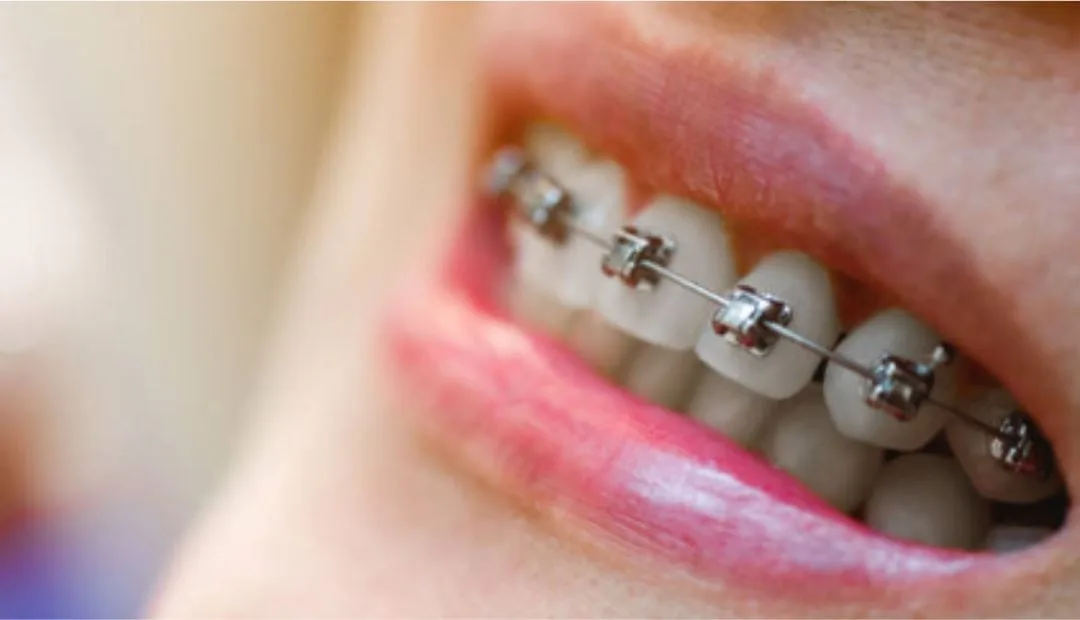
If you are looking for how to fix overbite concerns, our short answer is that braces for overbite correction using archwires, rubber bands, and other special tools can be beneficial. But will braces fix an overbite completely, no matter how severe it is? It depends on your case. So, let us learn how braces work, what a deep overbite looks like, and what to expect from this. Keep reading.
How Do Braces Actually Move Your Teeth and Jaw?
As already mentioned, braces work by applying gentle pressure to reposition your teeth and jaw. This happens only when orthodontists use different tools to make that happen. The exact treatment depends on your case. But the common steps in this process are as follows:
Intrusion and Extrusion
The main task of braces is to push your upper front teeth into your gums gently. It will pull your lower front teeth down so that they overlap vertically. At the same time, your back teeth will erupt a little more, which naturally opens up the bite and creates a more balanced smile.
Intermaxillary Elastics (Rubber Bands)
Upper and lower brackets remain joined with the help of these small rubber bands. You have to wear them according to the prescription and application of pulling force. As a result, your upper teeth will move backward with force, and your lower jaw or teeth will come forward. So, aligning the overbite is not possible without such elastics.
Orthodontic Auxiliaries (Forsus Springs and Herbst Appliances)
For severe cases, your orthodontist will also use special fixed appliances such as Forsus springs or a Herbst appliance. These devices push your lower jaw forward and pull your upper teeth back. This way, your jaw misalignment is corrected rather than just moving your teeth.
Bite Turbos and Pads
In some conditions, small ramps are placed behind your upper front teeth, and pads are placed on your lower molars. It will prevent your back teeth from touching when you bite down. This little trick helps open your bite and gives your teeth space to shift without getting your jaw in the way.
Tooth Extractions for Severe Cases
In situations where there is not enough space to move your teeth back, your orthodontist may recommend removal of some teeth, like bicuspids. In this way, the extra space to properly retract your front teeth will help you get a healthier, perfect bite.
Overbite vs Overjet: Key Differences
Although people often use these terms interchangeably, they describe different orthodontic problems.
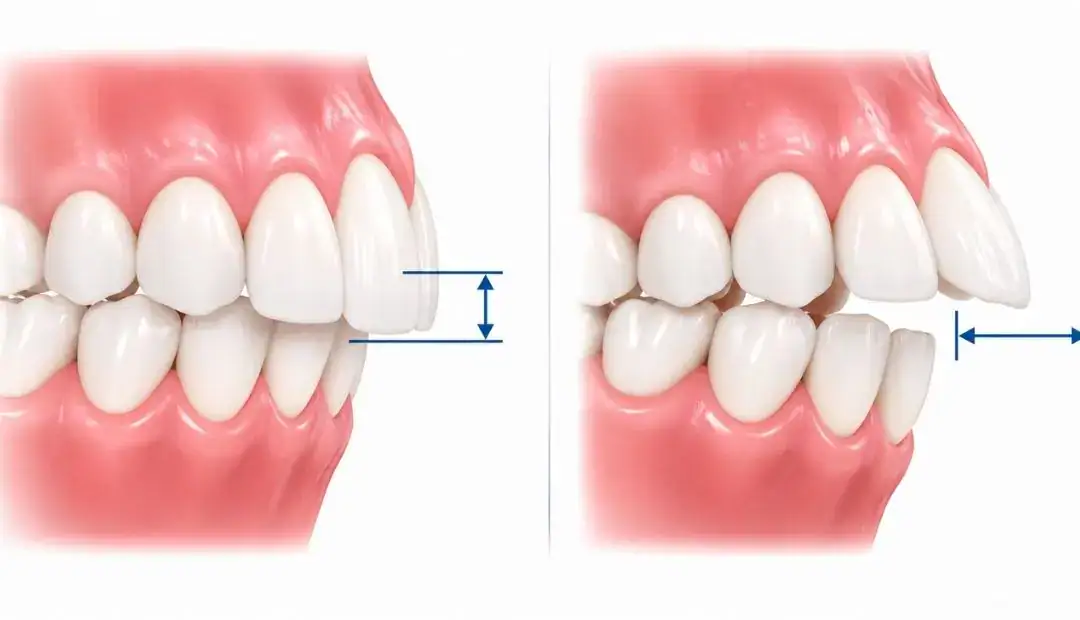
An overbite refers to the vertical overlap of the upper front teeth over the lower front teeth. An overjet describes how far the upper front teeth protrude horizontally in front of the lower teeth. Some patients have both conditions, while others have only one. Your orthodontist will determine which issue is affecting your bite before recommending treatment.
What Does a Deep Overbite Actually Look Like?
A normal bite has your upper front teeth on your lower teeth by about 2 to 4mm, or roughly 20 to 30%. In contrast, a deep overbite happens when that overlap is beyond normal, with 50% or more of the lower teeth. If not treated, a deep overbite wears down your enamel, puts pressure on your jaw joint, and even affects your speech. Because of this, catching the issues early matters a lot.
Types of Overbite
Not all overbites are the same. Orthodontists generally classify overbites based on whether the problem is caused by the teeth, the jaws, or the severity of the overlap.
Dental Overbite
A dental overbite occurs when the upper teeth overlap the lower teeth because of tooth positioning rather than jaw development. Most dental overbites can be corrected successfully with braces or clear aligners.
Skeletal Overbite
A skeletal overbite is caused by the size or position of the upper and lower jaws. Depending on the patient’s age and the severity of the condition, treatment may involve braces, functional appliances, or jaw surgery.
Deep Overbite
A deep overbite is a severe form of overbite where the upper front teeth cover more than half of the lower front teeth. Without treatment, it can lead to excessive tooth wear, jaw discomfort, and bite problems.
Will Braces Fix an Overbite Completely?
Yes, braces can completely fix most mild to moderate overbites. More severe skeletal overbites may require additional appliances or, in some adult cases, jaw surgery. The best treatment depends on the cause of your overbite. According to the American Association of Orthodontists (AAO), children should receive their first orthodontic evaluation by age 7. Early evaluation helps identify bite problems such as overbites and allows orthodontists to recommend treatment at the most appropriate stage of jaw development. Will braces fix an overbite? The answer always depends on the reasons behind it.
If the overbite is due to tooth position, braces alone are enough. If it arises due to a jaw-size mismatch, your orthodontist will combine braces with an appliance, or in rare adult cases, surgery, to fully overcome the bite problem
How Long Does It Take to Fix an Overbite with Braces?
The time needed to correct an overbite depends on its severity, your age, and how well you follow your orthodontist’s treatment plan. Mild cases are generally corrected faster, while severe overbites may require additional appliances and a longer treatment period.
| Overbite Severity | Estimated Treatment Time |
|---|---|
| Mild Overbite | 12–18 Months |
| Moderate Overbite | 18–24 Months |
| Severe Overbite | 24–30 Months |
| Severe Skeletal Overbite | 24–36 Months (may require additional treatment) |
How Much Do Braces Cost to Fix an Overbite?
The total cost depends on the type of braces, treatment length, your location, insurance coverage, and whether additional appliances are required. But the exact cost depends on your case’s complexity, your location, and your treatment timeline. Luckily, insurance covers a portion of this, especially for younger patients, so you must consult your plan’s orthodontic benefits before you budget for upcoming costs.
Cost for Teens
For younger patients, how much do braces cost for teens to fix an overbite is normally between $3,000 and $6,000. Being in a growing stage and more responsive to gentle guidance, treatment of a teenager’s jaw is faster and more predictable. In this way, you can keep the overall cost on the lower end of that range.

Cost for Adults
The price of adult treatment is slightly higher. How much do braces cost for an adult to fix an overbite ranges from $4,000 to $8,000. For fully developed jaws, the slower response increases the need for additional appliances and the duration of treatment to reach the same result.
Cost for Children
The cost of braces for children typically ranges from $3,000 to $6,000. The final price depends on the severity of the overbite, the type of braces used, and the length of treatment. Early orthodontic treatment may also reduce the need for more complex procedures later.
| Patient | Average Cost |
|---|---|
| Children | $3,000–$6,000 |
| Teens | $3,000–$6,000 |
| Adults | $4,000–$8,000 |
FAQs
What does a 100% overbite look like?
A 100% overbite means your upper front teeth are completely over your lower front teeth when you bite down. There will be no visible edge at all. In a serious case, braces and other orthodontic appliances work together to address this dental issue.
How long will it take braces to fix an overbite?
For most overbite cases, the time required is somewhere between 18 and 30 months to fully correct with braces. Mild cases finish sooner. Severity, age, and how consistently you wear braces all decide the final timeline.
How bad is a 90% overbite?
A 90% overbite is not a simple case, as the upper teeth completely cover the lower teeth. Here, a longer treatment plan works effectively and uses jaw-correcting appliances so that your bite can be back to a healthy, functional position.
Is 20 too late to fix an overbite?
Not at all. In fact, jaws respond perfectly to correction during the growing ages; braces work well for adults even in their 20s and beyond. But treatment will take more time, and extra appliances will also be used, than a teenager’s plan.
What is the best age to fix an overbite?
According to most orthodontists, an evaluation is a must by age 7, but active treatment will start between ages 9 and 14. At this stage, the jaw is still growing and easier to guide. That said, overbites’ successful treatment is possible at any age.
Can Invisalign fix an overbite?
Invisalign can treat mild to moderate overbites in many patients. Severe overbites often require traditional braces or additional orthodontic appliances for the best results.
What happens if an overbite is left untreated?
An untreated overbite can lead to excessive tooth wear, jaw pain, difficulty chewing, speech problems, and a higher risk of TMJ disorders over time.
Do you need braces for an overbite?
Not always. A mild overbite may not need treatment, but a moderate to severe one usually does — otherwise it can lead to jaw pain or uneven tooth wear.
How much are braces for an overbite?
About the same as regular braces. Price depends on the type (metal or ceramic) and treatment length, not the overbite itself. A free consult gives you the exact cost.
Final Thoughts!
To sum up, braces correct an overbite by the combination of gradual tooth movement and gentle jaw guidance. For this purpose, archwires, elastics, and specialized appliances are used to be effective over time. Most cases have positive results, but the right methods and the final cost depend on your age, your bite’s severity, and whether the issue is due to your teeth, your jaw, or both.
Schedule your free consultation with BaYou Braces today to receive a personalized treatment plan and learn which overbite correction option is right for your smile.