

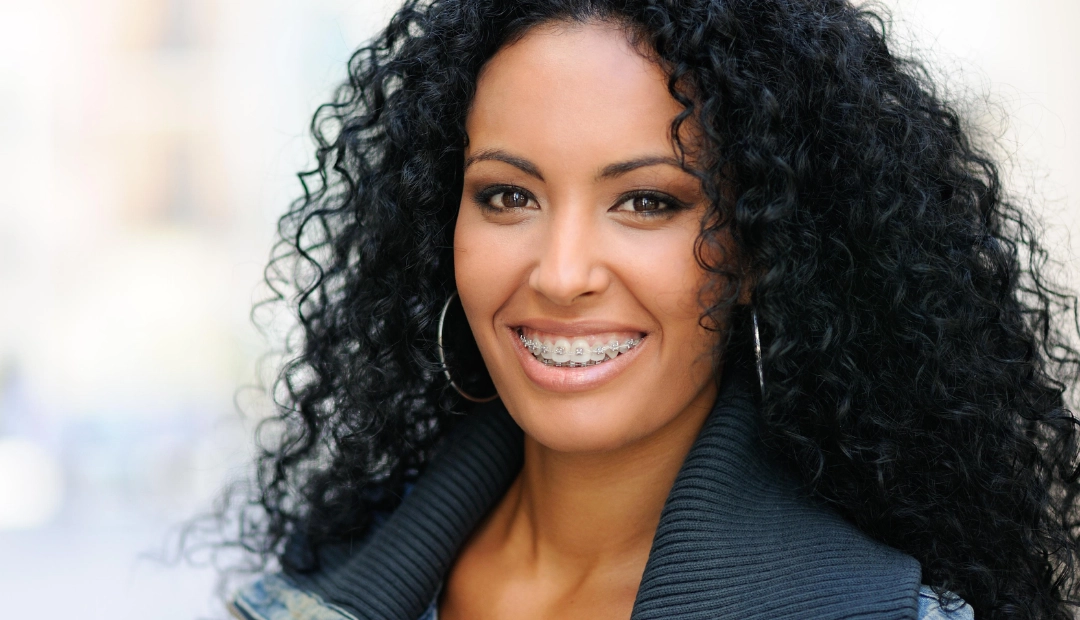
Braces can change your face shape, but usually in less noticeable ways than people expect. And the exact difference depends heavily on your starting bite and your age. Teeth alignment plays an important role in facial appearance more than most people realize. Because your lips, cheeks, and jawline all take some of their shape from the teeth and bite sitting behind them. Fixing an overbite, underbite, or severe crowding can change your profile.
But sometimes, years after treatment ends. Growing patients typically experience more obvious modifications than adults. This is because braces can affect jaw development while the bones are still growing.
In this article, we will discuss how and why braces affect facial appearance and the role age and bite severity play. You will also learn what changes to expect after your treatment ends.
How Can Braces Affect Your Facial Appearance?
Usually, braces can affect the real structure through the impact of tooth displacement, which is the main support for your lips and cheeks internally. There is a serious concern that they may disfigure your facial appearance, but the underlying bone remains the same for most adults. On the other hand, if your teeth align well, they can make your lips look better and create a balanced structure in the lower third of your face.
Soft Tissue vs Bone Structure
Some of what people observe after braces comes from changes to soft tissue. This includes the lips, cheeks, and gums, not the bones underneath. Your teeth act almost like a structure for your lips and cheeks. So shifting that scaffolding even a little can change how relaxed your lips look at rest. This is especially true in adults whose jawbone has already finished growing.
The Role of Tooth Position in Facial Support
Teeth that extend too much, sit too far back, or crowd together may throw off the balance between your lips and the rest of your face. When braces bring those teeth into a more typical position, the lips and cheeks tend to settle into a more proportional look. That is why a friend’s whole face may look different after braces, even though their bone structure hasn’t changed.
What Happens to Your Lips and Smile During Orthodontic Treatment?
Your lips and smile change slowly during orthodontic treatment as your teeth shift into positions that better support the surrounding soft tissue. Extruded front teeth that push the lips forward can settle back as they’re corrected. This frequently makes the lips look less strained or more relaxed. As your bite improves, your smile also tends to look more even. Because your teeth, when overlapped or set at odd angles, come into better alignment with each other.
Lip Position Before and After Treatment
Many patients who are suffering from a severe overbite or protruding front teeth usually start treatment with lips that look pushed forward at rest or don’t fully close without effort. As those teeth move back into the dental arch, the lips usually follow. It settles into a position where they meet more naturally. This change happens slowly over the course of treatment, rather than all at once.
Smile Symmetry and Alignment
Crowded or crooked teeth can make a smile appear distorted, even if the person’s face is otherwise symmetrical. Braces slowly fix this by bringing each tooth into its proper spot along the arch. By the time treatment is complete, it usually helps the smile look more balanced from left to right.
Can Braces Affect Your Side Profile?
Braces may influence your side profile, particularly in cases involving a severe overbite or underbite. Because fixing how the upper and lower jaws relate to each other modifies how your chin, lips, and jawline align when viewed from the side. These modifications are usually milder in adults than in growing patients. Because adult bone no longer responds to jaw-guiding appliances the way a child’s does.
Overbite and Profile Changes
A deep overbite can make the chin look smaller or more set back than it actually is. This happens because the upper teeth and lip cover more of the lower face than they should. It’s important to fix the bite and bring the chin into better proportion with the rest of the face. This is the main reason patients should have confidence in their profile, which looks stronger after treatment.
Underbite and Profile Changes
An underbite is when the lower jaw sits further forward than the upper jaw. It produces the opposite impression, which makes the chin look more prominent than the rest of the face. Braces can be enough to improve a mild underbite. But in more complicated cases, sometimes braces are needed combined with jaw surgery to fully correct the profile. This is because the skeletal relationship between the jaws is involved.
Why Do Facial Changes Differ From One Patient to Another?
Facial changes vary from one patient to another. Because the amount of visible change depends on the starting bite, the patient’s age, and how much the teeth and jaw actually need to move. A person with mild crowding and a normal bite will probably notice only a small difference in their face.

Because their treatment mostly focuses on straightening teeth rather than shifting jaw position. On the other hand, if someone has a severe overbite or underbite, they may notice a more noticeable shift in their profile, simply because their starting point needs more correction.
Starting Bite Severity
The more severe a bite issue is before treatment, the more chance there is for noticeable improvement after correction. A mild bite problem may require only small modifications that most people barely notice day to day. A severe bite problem often involves enough movement that friends and family notice the difference after treatment.
Age and Growth Potential
There is a proportional link between age and growth, so age has a necessity as a bite severity. A growing patient’s jawbone can respond to custom appliances that shape it. An adult’s bone structure, however, is fixed in place. Consider two patients with the same bite issue: one child and one adult. They may notice visibly different results from very similar treatment plans.
Treatment Length and Approach
Longer treatment plans that involve tools such as expanders or elastics tend to produce more noticeable changes than shorter plans. They may focus only on straightening a few crowded teeth.
Are Facial Changes More Noticeable in Growing Patients?
Facial changes are usually more visible in growing patients. Because their jawbones are still developing and can respond to appliances that guide growth in a specific direction. Many orthodontists can use tools such as palatal expanders or growth-modification appliances in children and younger teens to affect how the jaw develops. This isn’t possible once bone growth is complete in adulthood.
The American Association of Orthodontists says that early evaluation should occur around age 7. It helps orthodontists to detect and guide jaw growth problems while there’s still room to work with the developing bone structure.
Growth-Guiding Appliances
A palatal expander widens a narrow upper jaw by gently separating the bone at the roof of the mouth while it’s still forming. It creates more space for teeth and frequently improves how the mid-face looks from the front. Additionally, orthodontists use other appliances to encourage or hold back jaw growth in a specific direction.
This happens in children with a pronounced overbite or underbite. So these structural changes happen only in patients who are still growing. Because the bone involved fuses together by early adulthood, which is exactly why timing is more important.
Age Group | Type of Facial Change Possible | Why |
| Children (Growing Jaw) | In starting, the jaw’s structure could be changed | Bone actively responds to expanders and growth-guiding implants. |
| Teenagers (Still Growing) | Moderate structural and soft-tissue modifications | Jaw development is still ongoing, with some structural response. |
| Adults (Jaw Fully Grown) | Mainly soft-tissue and lip-position changes | No bone growth to guide, so tooth movement causes the changes. |
| Adults with Severe Malocclusion | Structural modifications possible with combined treatment | Jaw surgery connected with braces can reshape bone even after growth ends |
What Changes Should You Expect After Braces?
Changes after braces are frequently visible slowly. Some patients notice a more balanced smile and lip position rather than a dramatically different face. Any changes to the jawline or profile tend to appear over the following months as swelling settles and your bite fully adapts to its new position.
The American Association of Orthodontists states that orthodontic treatment is designed to solve both function and appearance together. This is why esthetic changes like lip position and smile balance are a normal part of a properly corrected bite.
Immediate vs Long-Term Changes
After the removal of braces, the first thing you will experience is a short period of minor swelling or a mouth just like adjusting to life without brackets. On the other hand, the changes that are long-term will be subtle, as you know: lips that remain natural. A smile that aligns evenly and, for patients whose bite involved real jaw correction, a profile that looks more proportional than before.
The Role of Retainers in Maintaining Results
Whatever facial changes braces produce, retainers are what keep them in place after treatment. Teeth that shift back toward their original position can slowly undo some of the lip and smile changes that came from moving them. This is one reason regular retainer wear matters beyond keeping teeth straight.
FAQs
Can braces actually change your face shape?
Braces can change your face shape to some degree, mainly by shifting how your lips and jaw line up once your bite is corrected. The amount of change depends on your starting bite, your age, and how much movement your treatment needs.
Can braces change your jawline?
Braces can affect how your jawline appears, particularly in growing patients where appliances can help jaw development. In adults, changes to the jawline are typically more subtle, coming from tooth movement as opposed to actual bone growth.
Will braces change my lips?
Braces can change your lips’ resting position. This is especially true if extended front teeth were pushing them forward before treatment. As those teeth move into better alignment, lips frequently settle into a more relaxed, natural position.
Can braces improve my facial profile?
Braces can improve your facial profile, particularly in cases involving a significant overbite or underbite, since correcting the bite changes how the chin, lips, and jaw line up. The improvement is usually more apparent in cases that started with more severe misalignment.
Are facial changes from braces permanent?
Facial changes from braces are typically permanent as long as you wear your retainer as directed after treatment. If you skip wearing your retainer, it can help your teeth to shift back, which may also reverse some of the facial changes over time.
Final Thoughts
Braces can change your facial structure. But the extent of change will depend on your starting bite and the amount of correction needed in the treatment. Some adults observe subtle modifications in lip position and smile balance. Growing patients may see more visible shifts in their jawline and profile because of appliances that guide jaw development. Retainers play an important role, more than some people expect, in making sure those changes last.
At BaYou Braces Clinic, we will discuss exactly what kind of facial changes are realistic for your specific case before starting the treatment. Are you worried about how braces might change your smile? Book your consultation with us now.