

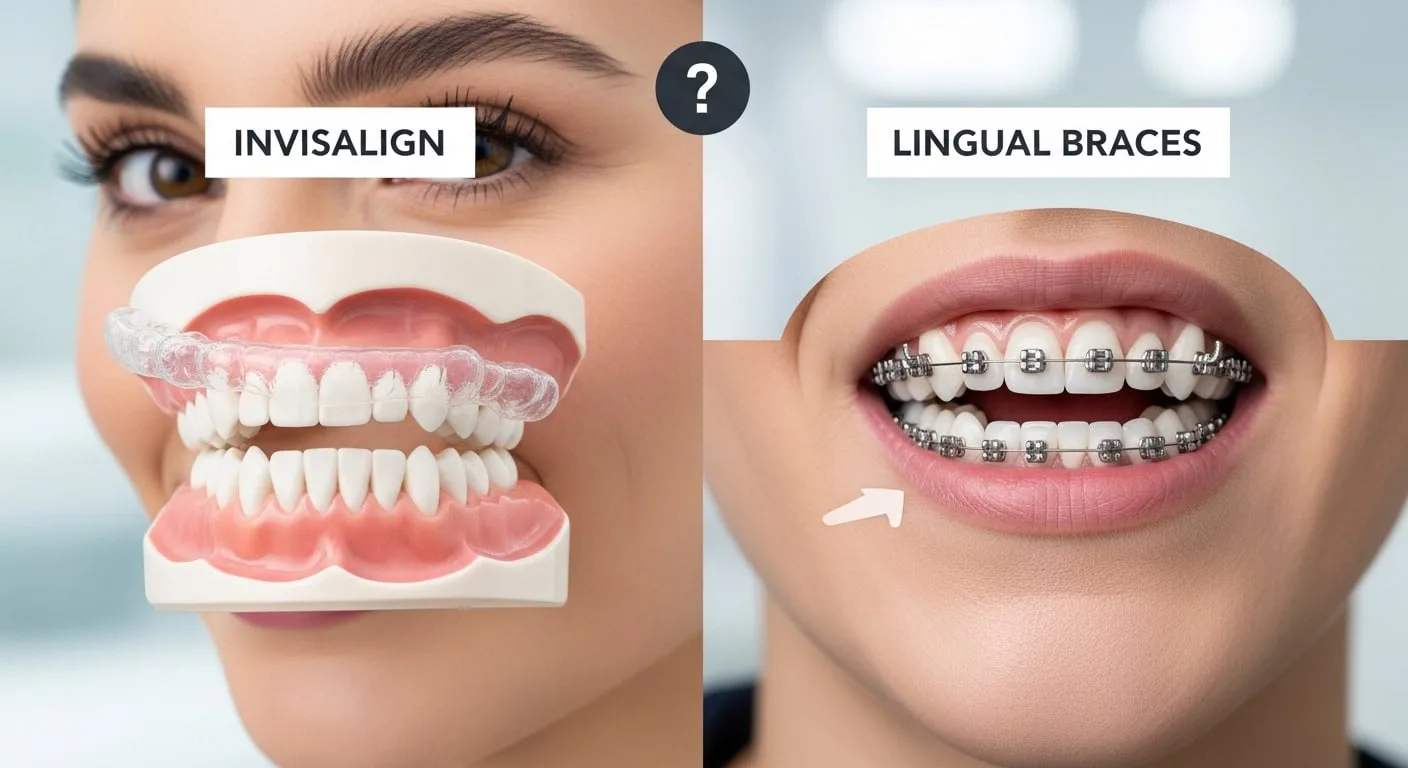
Invisalign and lingual braces are two commonly used orthodontic treatment solutions for straightening teeth. Both of these are made to provide specific benefits and considerations, so you need to know which choice is worthwhile. It depends on your specific preferences, budget, and unique dental requirements.  In this article, we will cover the differences between these hidden brace options. Also, we will learn about their advantages and disadvantages and guide you to choose the right option that is suitable according to your requirements and lifestyle.
In this article, we will cover the differences between these hidden brace options. Also, we will learn about their advantages and disadvantages and guide you to choose the right option that is suitable according to your requirements and lifestyle. Introduction to Discreet Braces Treatment
Many adults feel shy about wearing braces and are looking for an invisible option to straighten their teeth. So you are glad to know the modern orthodontist’s options, like Invisalign and lingual braces, which give you a discreet braces treatment that fulfills all your requirements. These options are less noticeable than traditional braces, which makes them more attractive for those who wish to maintain their professional appearance. Invisalign is clear and easily removable, but lingual braces are inserted inside your mouth, and they provide a completely invisible orthodontic experience. So the question is, how do you choose between these two? Let’s study these options in more detail.What Are Invisalign and Lingual Braces?
Invisalign
Invisalign is a clear aligner designed to meet your specific requirements. These removable aligners gradually move your teeth into their ideal positions. Adults who want to straighten their teeth without paying close attention to their treatment usually choose clear aligners because they are less noticeable than other options.Lingual Braces
Conversely, lingual braces are a kind of behind-the-tooth braces that are installed on the back of your teeth. These braces work like traditional braces, but they are fully hidden from view because they are positioned on the inside of your teeth. Lingual braces are invisible, like Invisalign, but they are fixed in place and cannot be removed.Pros and Cons of Invisalign
Pros:
- Invisible Appearance: Invisalign aligners are transparent, which makes them an outstanding solution for those who are searching for a discreet solution to straighten their teeth.
- Removable: The aligners can be easily removed for eating, drinking, brushing, or flossing, making them more convenient than other options.
- Comfort: The aligners are soft and made of plastic; they are comfortable and cause less gum irritation than traditional braces.
- Easier Maintenance: Invisalign is removable, and its trays can be cleaned separately, so you don’t need to worry about food getting stuck in your braces.
Cons:
- Discipline Required: Invisalign aligners are removable, but for the treatment to work, you must be careful to wear them for at least 20 to 22 hours daily.
- Not Suitable for Complex Cases: Invisalign may not always be the right choice. for patients who suffer from serious orthodontic problems, which include large bite problems or extreme tooth misalignment.
- More Expensive: Invisalign may sometimes be more expensive than traditional braces or lingual braces, depending on the complexity of your case or your treatment plan.
Pros and Cons of Lingual Braces
Pros:
- Completely Hidden: Lingual braces are inserted inside your teeth; they’re completely invisible to others, which makes them an outstanding option for those who wish for a truly hidden braces treatment.
- Fixed Treatment: You don’t have to worry about forgetting to wear aligners. Because lingual braces are fixed in place.
- Effective for Complex Cases: Lingual braces can treat more serious orthodontic cases that removable aligners might struggle with.
Cons:
- Discomfort: The placement of lingual braces on the back of the teeth may irritate the mouth and tongue. At the start of treatment, they may be uncomfortable.
- Difficult to Clean: Cleaning around lingual braces can be difficult because they are fixed to the teeth. You’ll need to floss and brush your teeth regularly to avoid food and plaque buildup.
- Longer Treatment Time: For some people, lingual braces might take longer than Invisalign because they fail to offer the same level of adjustment flexibility or comfort.
Adult Orthodontic Options: What Should You Choose?
Both lingual braces and Invisalign are outstanding options for adult orthodontics if you want a gorgeous smile without the look of traditional braces. Invisalign may be a better option if you want flexibility and ease, as it lets you remove the aligners when needed. Lingual braces may be the most suitable choice if you want to go for a totally invisible solution and prefer a fixed solution. In the end, your decision will be based on your budget, treatment needs, and personal choices. You need to consult with an orthodontist; they will help you choose the best treatment based on your unique requirements.