

Skip to content
Bayou Braces
Main Menu
Bayou braces logo
Bayou Braces

A Complete Guide to Different Types of Braces!

👤 bayou 📅 February 14, 2025 🕒 4:27 am
Dental braces and their types

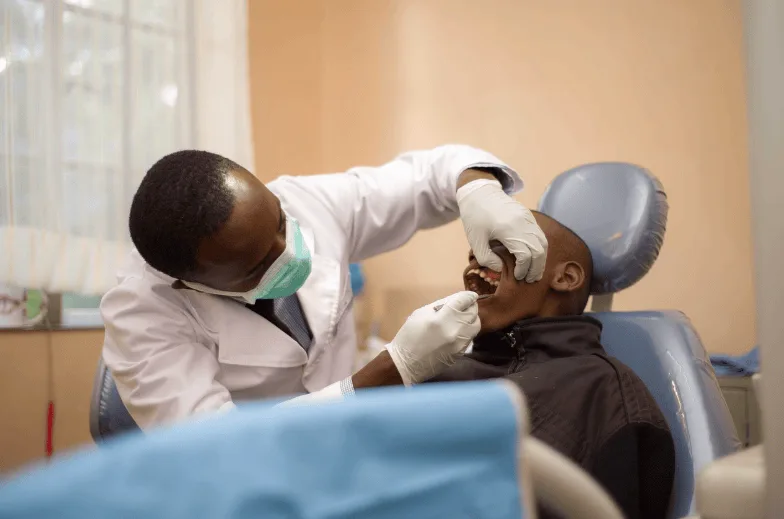
If you are a patient with some dental issue, especially crooked teeth, you are definitely aware of “braces.” These braces are a common dental treatment for straightening teeth and correcting bite problems like overbite, underbite, and crossbite. They are not just for kids and teens. People of all ages may wear braces for teeth, but they are normally suggested for kids and teens while their teeth are still forming.

But did you know that there are different types of braces to choose from? There are different designs, materials, and comfort levels for each type. Braces are varied in their level of visibility, ranging from highly noticeable to almost invisible.

Your needs determine your selection of braces. In this blog post, I will describe all types of braces and what is special about each. So, keep reading now!

Why Do Braces Matter the Most?

Apart from making you look good, braces help maintain your oral health. They can help fix alignment problems, thus fixing your teeth so that you can better chew, speak, and clean your teeth properly.

Following are the reasons why all orthodontic brace types work well:

  • They create enough space to keep teeth from overlapping.
  • They align the top and bottom teeth for a more comfortable and balanced bite.
  • They close unwanted spaces, giving your smile a more even look.
  • They improve how your jaw functions and help reduce pain or discomfort.

By fixing these issues, braces increase your confidence and help keep your teeth and gums healthier than before.

What are the Different Types of Braces?

Now, you may come across different types of braces, but I will discuss the major ones:

1. Traditional Metal Braces

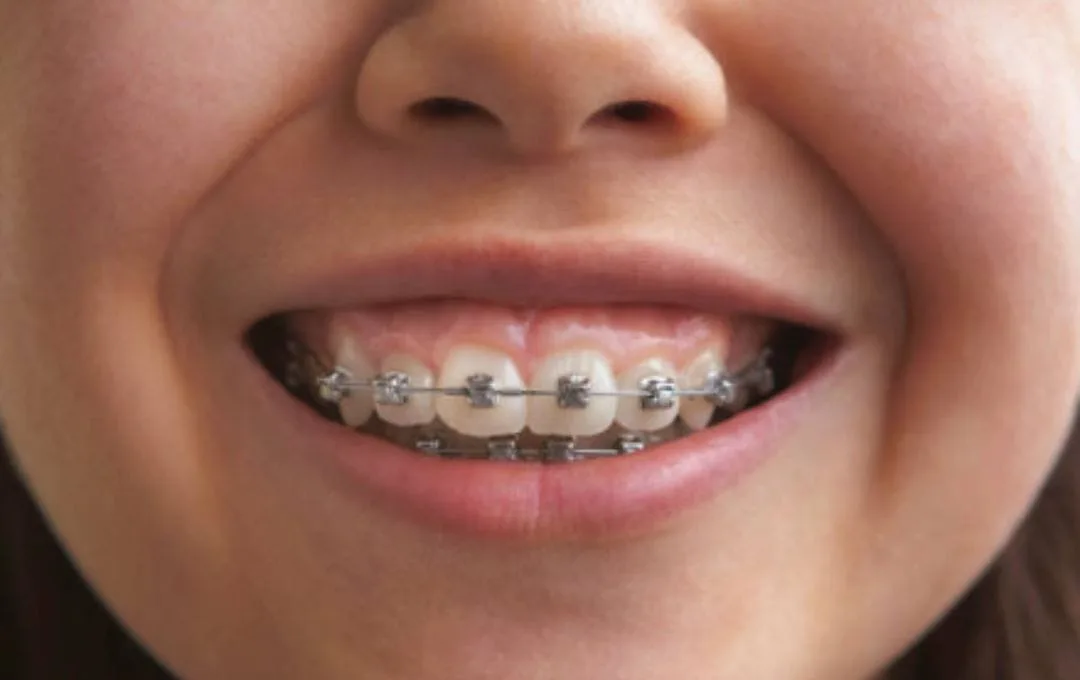
The most common type of braces worldwide is metal braces. They have been used for more than a century. Once, they were bulky and easily seen. However, modern technology has brought small, fast, comfortable, high-tech braces.

These braces are popular, especially among kids and teens. The brackets attach to the teeth and connect with a wire. The elastic ties keep the wire in place and are available in fun colors. The orthodontist adjusts the wire every 4-8 weeks to move the teeth into place, gradually pulling the teeth into position.

Unlike clear aligners, which can be removed, metal braces stay in place, so you do not need to worry about forgetting to wear them. However, good oral hygiene is super important throughout the treatment to keep teeth healthy.
2. Ceramic Braces

The second common type is ceramic braces, which are made with a clear or tooth-colored material, so they are not as noticeable as metal braces. They function in the same way as regular dental braces but are less noticeable. Many teens and adults prefer such braces when they want an affordable yet discreet way to straighten their teeth but feel that clear aligners or lingual braces are not the right fit for them.

If you are concerned about appearance too, then ceramic braces are more what you are looking for. They barely stand out at all from the beauty of your teeth. Nevertheless, they are slightly bigger and may stain over time depending on what you eat and your brushing habits. While not everyone will be happy with them, these tooth braces are still a fabulous choice for getting your desired smile.

3. Lingual Braces

Orthodontic treatment using lingual braces is one of the most specialized and rarest types of braces for teeth available. They are basically invisible as they are placed on the teeth at the back. Some orthodontists (not all) can offer them. It is because they require more training and a special skill set that is not included in basic orthodontic training programs.

These braces are a great option for adults who want an effective way to straighten their teeth, especially if they have complex alignment issues. More teens who care about aesthetics are also choosing lingual braces for a hidden yet effective solution.

While lingual braces have many benefits, they do come with some challenges. Some patients notice slight changes in their speech, like a temporary lisp or mild tongue irritation. Thankfully, these issues usually fade within a few weeks as the mouth adjusts.

There are several kinds of braces in this category, including.

a) Incognito nanobraces by 3M

b) Suresmile by Dentsply

c) Harmony by American Orthodontics

d) Alias by Ormco

e) INBRACE

f) Lingual Liberty

g) BRIUS

4. Self-Ligating Braces

Self-ligating braces work just like traditional metal and ceramic braces, using brackets and wires to move teeth. However, they use small doors or clips instead of elastic rubber ties to hold the wire in place. This unique design makes adjustments quicker and more comfortable.

One big advantage of such orthodontic braces is that they can shorten appointment times since they are easier to adjust. This makes them a great choice for:

  • Patients with a low tolerance for discomfort because the smooth design reduces friction, making the experience gentler.
  • For patients who struggle to sit still, faster adjustments mean less time in the dental chair.
  • For patients with developmental delays, it is a more efficient option for those with special orthodontic needs.

5. Clear Aligners (Invisalign)

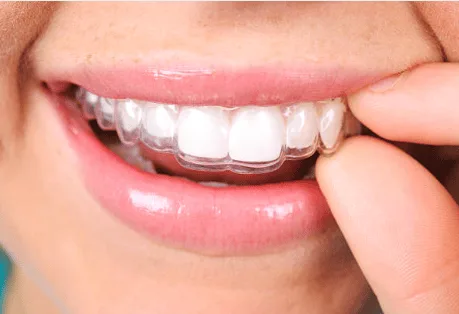
Over the last decade, clear aligners have become incredibly popular among all tooth brace types. Invisalign, which launched in the early 2000s, is the most well-known brand – just like Kleenex, which is often used for tissues. These aligners offer a modern, wire-free way to straighten teeth.

Unlike traditional braces, clear aligners are removable and transparent. They work by gradually shifting teeth into place using a series of custom-made trays. Each set is worn for about two weeks before switching to the next, slowly aligning teeth.

Clear aligners work best for mild to moderate cases, such as small gaps or minor misalignments. However, lingual braces or a mix of aligners and braces may be better for complex issues. A consultation can help determine the right choice for you.
Why Choose Bayou Braces?

Bayou Braces helps people of all ages get straight teeth with different types of teeth braces, especially metal braces and Invisalign in Louisiana. Our modernity and experts can give you the best smile. Our team is kind, skilled, and ready to make your treatment successful. Our plus point is flexible payment plans; we accept most insurance to make it affordable. So, visit Bayou Braces and be ready to get a confident smile.

(225) 926-4133

Get started today

New Smiles Are Welcome

The first step to your new smile is to request an appointment with our amazing doctors and team! We can’t wait to chat about your unique treatment plan that will be customized to your specific needs. Let’s get started!

Free Ortho Consult
Pediatric Dentistry Appt
patient Reviews

Our 5-Star Experience

We don’t like to brag, so we’ll let some of our patients do it for us! Over the years, our team has helped many patients create amazing smiles and healthy mouths beyond their wildest dreams.

Excellent place to improve your teeth and have a beautiful smile. The service is friendly and very professional. 10/10.
Lorena R.
Lorena R.
21:45 12 Feb 26
I went to the one in Baton rouge off of Perkins Rd. The whole atmosphere was very welcoming and warm . They were friendly & kind , quick and fast with the whole process. Kandy was awesome... 😊 . She answered all my questions & went step by step through the whole process. The process wasn’t too bad, and the payment plan is super helpful. Definitely would recommend !read more
Kiera W.
Kiera W.
17:53 12 Feb 26
Kamie is a wonderful person. She is very knowledgeable and professional in her work at Bayou Braces. Loved my experience at Bayou Braces
Brittany G.
Brittany G.
18:35 29 Jan 26
Bayou Braces is the best. Jayla (the Westbank location) was so gentle, I barely felt her working in my mouth. Dr. Rich has the most amazing team.
Tiara Washington K.
Tiara Washington K.
15:14 22 Dec 25
Great customer, always making me and my child feel welcomed
Gerard M.
Gerard M.
04:43 19 Nov 25
I love the patience and care everyone has for my son when he goes in .
Chrissy P.
Chrissy P.
15:11 21 Aug 25
Charleen and Barrynee were amazing and very helpful. We got braces the same day as our consult. Great service.
Chantelle N.
Chantelle N.
14:52 06 Jun 25
I’ve been a patient for six months. My visits are always pleasant, in and out, the staff is very friendly.
Patrice P.
Patrice P.
01:59 07 May 25
The staff at Bayou Braces Laplace store is awesome! They make you feel so comfortable and welcomed. Dr. Breaux. His family, and start sets the tone for the atmosphere. I was not planning on... getting the service until receiving the amazing customer service for Dr. Breaux. He is phenomenal with clients. This site is highly recommended.read more
Omarion D.
Omarion D.
03:52 24 Mar 25
Brought both my kids into the Laplace location this morning everyone in there was very nice patient
Jennifer J.
Jennifer J.
00:22 25 Feb 25
‹
›
js_loader

344+ Reviews

4.5 Average Rating

 Rated 4.5 out of 5
more awesome reviews
Free Ortho Consult
Pediatric Dentistry Appt

We’d Love to Meet You

Thank you for visiting us online! Now it’s time to meet in person! Our team of amazing professionals are proud to offer you and your family with excellent care in the Baton Rouge, New Iberia, Lafayette and New Orleans areas of Louisiana.

Call or text

  • (225) 926-4133

Hours

  • Monday - Friday / 8 am - 5 pm
Our locations

Locations

  • Baton Rouge
  • 8482 Perkins Rd.
    Baton Rouge, LA 70810
  • New Iberia
  • 603 Rue de Lion
    New Iberia, LA 70563
  • New Orleans West Bank
  • 2800 Manhattan Blvd. Suite D
    Harvey, LA 70058
  • New Orleans East
  • 10980 I-10 Service Rd.
    New Orleans, LA 70128
  • Lafayette
  • 3259 Ambassador Caffery
    Lafayette, LA 70506
  • Alexandria
  • 4011 Lakeside Dr. Alexandria,
    LA 71302
  • Laplace
  • 170 Belle Terre Blvd. #160
    Laplace, LA 70068
Follow Us
aao
ada
invisalign

© Copyright 2026 Bayou Braces | Sitemap | Privacy Policy | Terms & conditions | Accessibility

Accessibility
Accessibility modes
Epilepsy Safe Mode
Dampens color and removes blinks
This mode enables people with epilepsy to use the website safely by eliminating the risk of seizures that result from flashing or blinking animations and risky color combinations.
Visually Impaired Mode
Improves website's visuals
This mode adjusts the website for the convenience of users with visual impairments such as Degrading Eyesight, Tunnel Vision, Cataract, Glaucoma, and others.
Cognitive Disability Mode
Helps to focus on specific content
This mode provides different assistive options to help users with cognitive impairments such as Dyslexia, Autism, CVA, and others, to focus on the essential elements of the website more easily.
ADHD Friendly Mode
Reduces distractions and improve focus
This mode helps users with ADHD and Neurodevelopmental disorders to read, browse, and focus on the main website elements more easily while significantly reducing distractions.
Blindness Mode
Allows using the site with your screen-reader
This mode configures the website to be compatible with screen-readers such as JAWS, NVDA, VoiceOver, and TalkBack. A screen-reader is software for blind users that is installed on a computer and smartphone, and websites must be compatible with it.
Online Dictionary
    Readable Experience
    Content Scaling
    Default
    Text Magnifier
    Readable Font
    Dyslexia Friendly
    Highlight Titles
    Highlight Links
    Font Sizing
    Default
    Line Height
    Default
    Letter Spacing
    Default
    Left Aligned
    Center Aligned
    Right Aligned
    Visually Pleasing Experience
    Dark Contrast
    Light Contrast
    Monochrome
    High Contrast
    High Saturation
    Low Saturation
    Adjust Text Colors
    Adjust Title Colors
    Adjust Background Colors
    Easy Orientation
    Mute Sounds
    Hide Images
    Hide Emoji
    Reading Guide
    Stop Animations
    Reading Mask
    Highlight Hover
    Highlight Focus
    Big Dark Cursor
    Big Light Cursor
    Cognitive Reading
    Virtual Keyboard
    Navigation Keys
    Voice Navigation

    Bayou Braces

    Accessibility Statement

    • bayoubraces.com
    • May 7, 2026

    Compliance status

    We firmly believe that the internet should be available and accessible to anyone, and are committed to providing a website that is accessible to the widest possible audience, regardless of circumstance and ability.

    To fulfill this, we aim to adhere as strictly as possible to the World Wide Web Consortium’s (W3C) Web Content Accessibility Guidelines 2.1 (WCAG 2.1) at the AA level. These guidelines explain how to make web content accessible to people with a wide array of disabilities. Complying with those guidelines helps us ensure that the website is accessible to all people: blind people, people with motor impairments, visual impairment, cognitive disabilities, and more.

    This website utilizes various technologies that are meant to make it as accessible as possible at all times. We utilize an accessibility interface that allows persons with specific disabilities to adjust the website’s UI (user interface) and design it to their personal needs.

    Additionally, the website utilizes an AI-based application that runs in the background and optimizes its accessibility level constantly. This application remediates the website’s HTML, adapts Its functionality and behavior for screen-readers used by the blind users, and for keyboard functions used by individuals with motor impairments.

    If you’ve found a malfunction or have ideas for improvement, we’ll be happy to hear from you. You can reach out to the website’s operators by using the following email

    Screen-reader and keyboard navigation

    Our website implements the ARIA attributes (Accessible Rich Internet Applications) technique, alongside various different behavioral changes, to ensure blind users visiting with screen-readers are able to read, comprehend, and enjoy the website’s functions. As soon as a user with a screen-reader enters your site, they immediately receive a prompt to enter the Screen-Reader Profile so they can browse and operate your site effectively. Here’s how our website covers some of the most important screen-reader requirements, alongside console screenshots of code examples:

    1. Screen-reader optimization: we run a background process that learns the website’s components from top to bottom, to ensure ongoing compliance even when updating the website. In this process, we provide screen-readers with meaningful data using the ARIA set of attributes. For example, we provide accurate form labels; descriptions for actionable icons (social media icons, search icons, cart icons, etc.); validation guidance for form inputs; element roles such as buttons, menus, modal dialogues (popups), and others. Additionally, the background process scans all the website’s images and provides an accurate and meaningful image-object-recognition-based description as an ALT (alternate text) tag for images that are not described. It will also extract texts that are embedded within the image, using an OCR (optical character recognition) technology. To turn on screen-reader adjustments at any time, users need only to press the Alt+1 keyboard combination. Screen-reader users also get automatic announcements to turn the Screen-reader mode on as soon as they enter the website.

      These adjustments are compatible with all popular screen readers, including JAWS and NVDA.

    2. Keyboard navigation optimization: The background process also adjusts the website’s HTML, and adds various behaviors using JavaScript code to make the website operable by the keyboard. This includes the ability to navigate the website using the Tab and Shift+Tab keys, operate dropdowns with the arrow keys, close them with Esc, trigger buttons and links using the Enter key, navigate between radio and checkbox elements using the arrow keys, and fill them in with the Spacebar or Enter key.Additionally, keyboard users will find quick-navigation and content-skip menus, available at any time by clicking Alt+1, or as the first elements of the site while navigating with the keyboard. The background process also handles triggered popups by moving the keyboard focus towards them as soon as they appear, and not allow the focus drift outside it.

      Users can also use shortcuts such as “M” (menus), “H” (headings), “F” (forms), “B” (buttons), and “G” (graphics) to jump to specific elements.

    Disability profiles supported in our website

    • Epilepsy Safe Mode: this profile enables people with epilepsy to use the website safely by eliminating the risk of seizures that result from flashing or blinking animations and risky color combinations.
    • Visually Impaired Mode: this mode adjusts the website for the convenience of users with visual impairments such as Degrading Eyesight, Tunnel Vision, Cataract, Glaucoma, and others.
    • Cognitive Disability Mode: this mode provides different assistive options to help users with cognitive impairments such as Dyslexia, Autism, CVA, and others, to focus on the essential elements of the website more easily.
    • ADHD Friendly Mode: this mode helps users with ADHD and Neurodevelopmental disorders to read, browse, and focus on the main website elements more easily while significantly reducing distractions.
    • Blindness Mode: this mode configures the website to be compatible with screen-readers such as JAWS, NVDA, VoiceOver, and TalkBack. A screen-reader is software for blind users that is installed on a computer and smartphone, and websites must be compatible with it.
    • Keyboard Navigation Profile (Motor-Impaired): this profile enables motor-impaired persons to operate the website using the keyboard Tab, Shift+Tab, and the Enter keys. Users can also use shortcuts such as “M” (menus), “H” (headings), “F” (forms), “B” (buttons), and “G” (graphics) to jump to specific elements.

    Additional UI, design, and readability adjustments

    1. Font adjustments – users, can increase and decrease its size, change its family (type), adjust the spacing, alignment, line height, and more.
    2. Color adjustments – users can select various color contrast profiles such as light, dark, inverted, and monochrome. Additionally, users can swap color schemes of titles, texts, and backgrounds, with over seven different coloring options.
    3. Animations – person with epilepsy can stop all running animations with the click of a button. Animations controlled by the interface include videos, GIFs, and CSS flashing transitions.
    4. Content highlighting – users can choose to emphasize important elements such as links and titles. They can also choose to highlight focused or hovered elements only.
    5. Audio muting – users with hearing devices may experience headaches or other issues due to automatic audio playing. This option lets users mute the entire website instantly.
    6. Cognitive disorders – we utilize a search engine that is linked to Wikipedia and Wiktionary, allowing people with cognitive disorders to decipher meanings of phrases, initials, slang, and others.
    7. Additional functions – we provide users the option to change cursor color and size, use a printing mode, enable a virtual keyboard, and many other functions.

    Browser and assistive technology compatibility

    We aim to support the widest array of browsers and assistive technologies as possible, so our users can choose the best fitting tools for them, with as few limitations as possible. Therefore, we have worked very hard to be able to support all major systems that comprise over 95% of the user market share including Google Chrome, Mozilla Firefox, Apple Safari, Opera and Microsoft Edge, JAWS and NVDA (screen readers).

    Notes, comments, and feedback

    Despite our very best efforts to allow anybody to adjust the website to their needs. There may still be pages or sections that are not fully accessible, are in the process of becoming accessible, or are lacking an adequate technological solution to make them accessible. Still, we are continually improving our accessibility, adding, updating and improving its options and features, and developing and adopting new technologies. All this is meant to reach the optimal level of accessibility, following technological advancements. For any assistance, please reach out to