

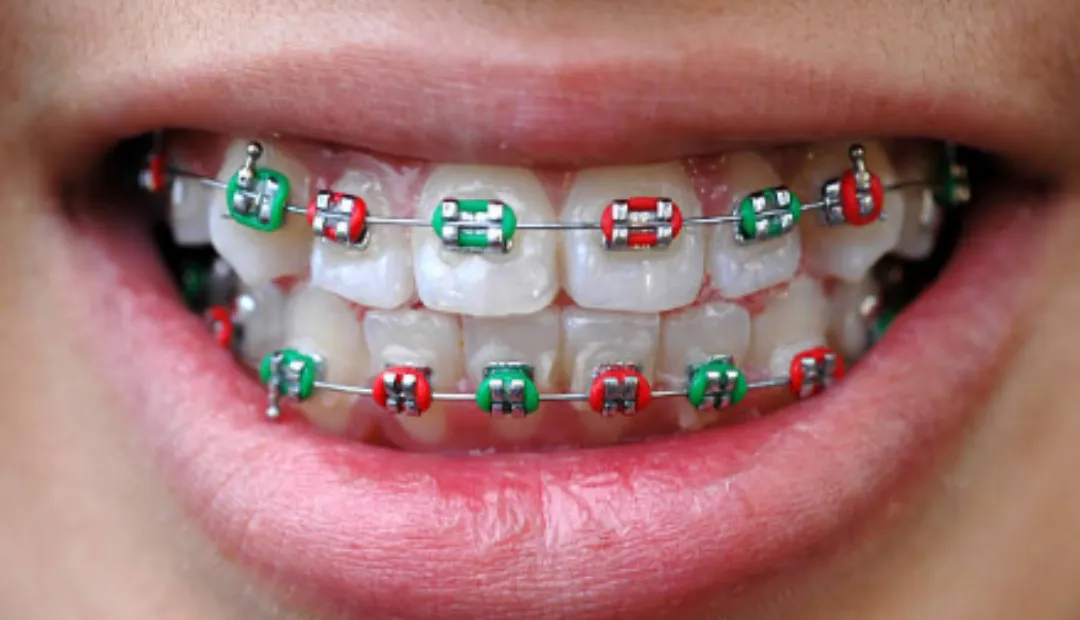
If your teeth don’t move as expected with braces, your orthodontist reviews your treatment plan, finds out why progress slowed, and adjusts your braces or method. Sometimes the fix is just wearing elastics more often. Other times, it is something in your body, like a tooth partly fused to the bone or a root that moves more slowly than others. Either way, slow tooth movement doesn’t mean treatment failed. It just means your orthodontist should tweak the plan so that things keep moving again.
How Do Orthodontists Know If Teeth Are Moving Properly?
Orthodontists determine this by comparing your teeth’s current position with where they were previously. They do this using digital scans, photos, and precise measurements from your previous appointments. You must adjust it every 4-8 weeks. During this visit, they assess the extent of tooth movement and know if it is on target or not. Those visits clearly indicate if they feel a tooth is late. For this reason, the regular visits are much more important, even if there is no apparent difference from one day to the next.
Many offices also take bite records, inside-the-mouth scans, and progress photos to have an exact timeline. If they compare a scan from month 3 to a scan from month 6, they can identify precisely how much a tooth travelled, how much it rotated, and how much it is from the start plan. This type of tracking identifies reductions in speed early, often before you know that you are slowing down.
Why Might a Tooth Move More Slowly Than Others?
The slow tooth movement is due to a few common reasons. Your habits, missed appointments, or just your body’s natural abilities can all slow things down. If you are supposed to wear orthodontic elastics or use an expander and you don’t, your teeth don’t get the steady push they need. Skipping your tightening visits does the same thing; the wire loses its pull in between. Heavy chewing, pushing with your tongue, or grinding at night can also fight against what the braces are trying to do.
And sometimes it is just the tooth itself. A tooth with a longer or more curved root, or with denser bone around it, just responds more slowly. That is totally normal, and it doesn’t mean treatment isn’t working. Moving a tooth means the bone has to break down a little on one side and build back up on the other. Some teeth just take longer to go through that.
Can Tooth Position Affect How Quickly It Moves?
Tooth position can affect how quickly it moves because teeth that need to move farther, rotate a lot, or move through denser bone naturally take more time than teeth that only need a small shift. A tooth that’s very tilted, stuck, or crowded against others often meets more resistance early on. So it may look slower even though the plan is working fine for a complex case like that.
Turning a tooth takes longer than tipping or sliding because twisting it back requires all the periodontal ligament fibers around the root to reset, rather than just shifting on one side. Back teeth, like molars, also sit in denser bone than front teeth for many people, which can slow them down compared to incisors, even with the same wire pressure.
What Happens When a Tooth Stops Moving?
When a tooth doesn’t move at all, your orthodontist uses X-rays to check the tooth root and surrounding bone for issues like impaction or ankylosis.
Ankylosis is a condition in which the tooth fuses with the jawbone and is no longer connected to the periodontal ligament, as healthy teeth are. Ankylosis makes normal braces movement impossible for that tooth, since braces move teeth by working on the ligament and the bone remodeling around it, not on solid, fused bone.
X-rays can also show early signs of root resorption. It is a separate condition in which the tooth root gets a little shorter due to prolonged pressure. Some minor root resorption is normal during treatment and rarely causes issues, but more shortening may be why your orthodontist slows or pauses pressure on that tooth to keep it safe. This is rare, but if your orthodontist finds ankylosis or notable resorption, they will plan around that tooth instead of using the same pressure that works on other teeth in your mouth.
Can Orthodontic Treatment Be Adjusted When Progress Slows?
Orthodontic treatment can be changed when progress slows. This is a normal part of a longer treatment plan, not a sign something went wrong. Your orthodontist may switch to a different wire with more flexibility or a different pull, use stronger orthodontic elastics, or add a temporary anchorage device, a small titanium screw put in the jawbone that gives a slow tooth something stronger to pull against than another tooth.
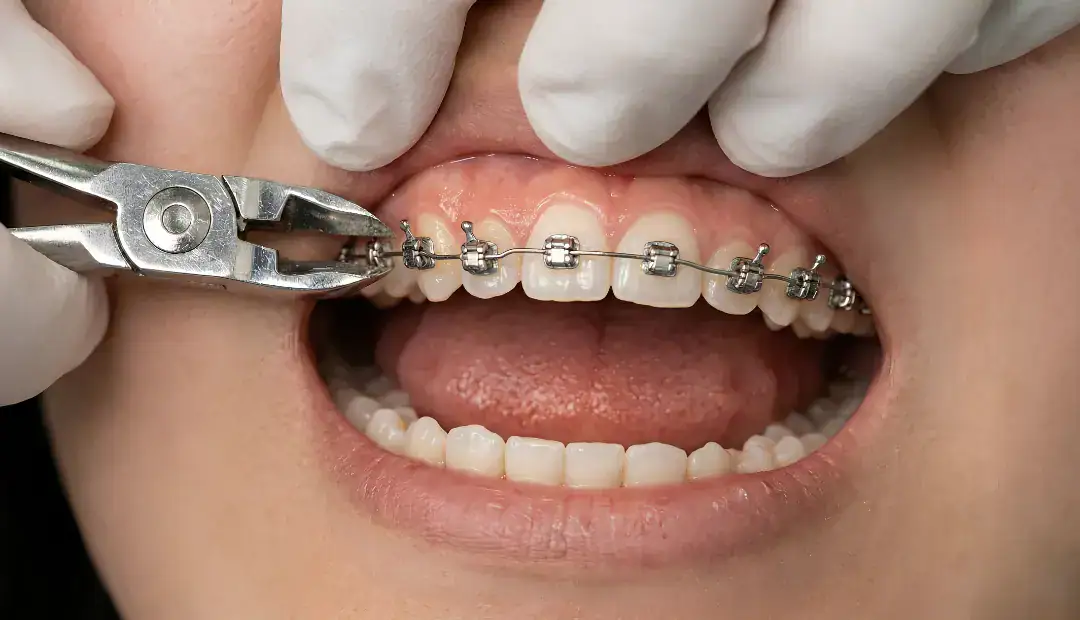
The American Association of Oral and Maxillofacial Surgeons says these devices help a lot when a tooth cannot be used as its own anchor. Because using a nearby tooth can sometimes move that tooth the wrong way. Using a separate anchor protects your other progress while giving the slow tooth the push it needs. Depending on the case, your orthodontist may also suggest a break from force on a tooth for a while to let swelling go down before trying a new method.
Causes of Slow Movement | What Your Orthodontist Might Do |
| Missed elastic or expander wear | Reinforce instructions, track compliance closely |
| Skipped adjustment visits | Reschedule consistent visits every 4-8 weeks |
| Grinding or tongue thrusting | Add a nightguard or myofunctional therapy |
| Naturally dense bone or long roots | Adjust wire type, extend timeline for that tooth |
| Ankylosis or root resistance | Use a TAD, revise the plan, or consider extractions |
When Should You Be Concerned About Slow Tooth Movement?
You should keep an eye out if one tooth looks exactly the same after many visits. Or if that one tooth hurts, feels loose, or looks swollen while the rest of your mouth is fine. Most of the time, a stall is small, and it just takes a little change in the plan to fix it. Just bring it up at your next visit so it can start moving again.
If your orthodontist tries a few different things and that stubborn tooth still does not move at all, there are a couple of options. Leave it in a slightly different spot than planned, extract it and close the gap with braces, or fix it with a crown or veneer so it matches your smile. Such a condition is rare, though. Most people who hit a short stall just need a simple tweak to the plan.
Frequently Asked Questions
Why is one tooth not moving with braces?
A tooth may not move because of missed elastics, a missed adjustment, heavy grinding, or a body issue like ankylosis, where the tooth is partly stuck to the jawbone instead of connected by the normal ligament.
Can some teeth move slower than others?
Yes, teeth move at different speeds depending on root shape, bone density, and how far or how much rotation that tooth needs. That’s normal across all teeth.
What happens if a tooth stops moving?
Your orthodontist will take X-rays to check for issues like ankylosis, impaction, or root resorption, then adjust your treatment plan. It normally includes a temporary anchorage device, a different wire, or a new goal for that specific tooth.
Can orthodontists change the treatment plan?
Yes, changing the treatment plan is common in orthodontic care. It can mean new wires, stronger elastics, a temporary anchorage device, or more time for one tooth.
Does slow tooth movement mean braces are not working?
No, slow movement on one or two teeth just means that the tooth needs a different method, not that your braces or overall treatment plan failed. Most patients still get their final result, just on a slightly different timeline.
Final Thoughts
Teeth not moving like expected with braces is way more common than people think. Usually the reason is simple, like uneven elastic wear, or a tooth that needs a little extra help with a temporary anchorage device. It is only in those rare cases, like ankylosis or serious root resorption, where the orthodontist has to be real with you and say Hey, we cannot force this tooth; let us change the goal for it instead.
So, at BaYou Braces, they check your progress every single time you come in. If something starts lagging, they adjust the plan right there. If you are worried about a tooth that is not moving as per your expectations, schedule a consultation with BaYou Braces now and get a straight answer on what to do next.